
Digital Overload & Mental Health in the UAE: Screen-Time Stress, Sleep & Anxiety
From WhatsApp pings to back-to-back meetings, the UAE’s always-on culture fuels digital overload. With some of the world’s highest daily screen-time averages, many residents in Dubai and Abu Dhabi report rising anxiety, poor sleep, and brain fog. This guide explains the science behind screen-time stress and gives UAE-specific ways to reset—plus when to consider professional counseling in Dubai.
Why the UAE Is Especially Vulnerable
The UAE’s high smartphone penetration, hybrid work patterns, and vibrant social scene make digital engagement hard to switch off. Government wellbeing strategies (see UAE Mental Health portal) highlight prevention—yet many residents still face:
- 24/7 availability expectations across time zones
- Multiple messaging channels for work and family abroad
- Commute and wait times filled with endless scrolling
- Pressure to maintain a polished online persona
Result: chronic stimulation with fewer recovery windows—prime conditions for burnout and anxiety.
The Science: How Screens Impact the Brain
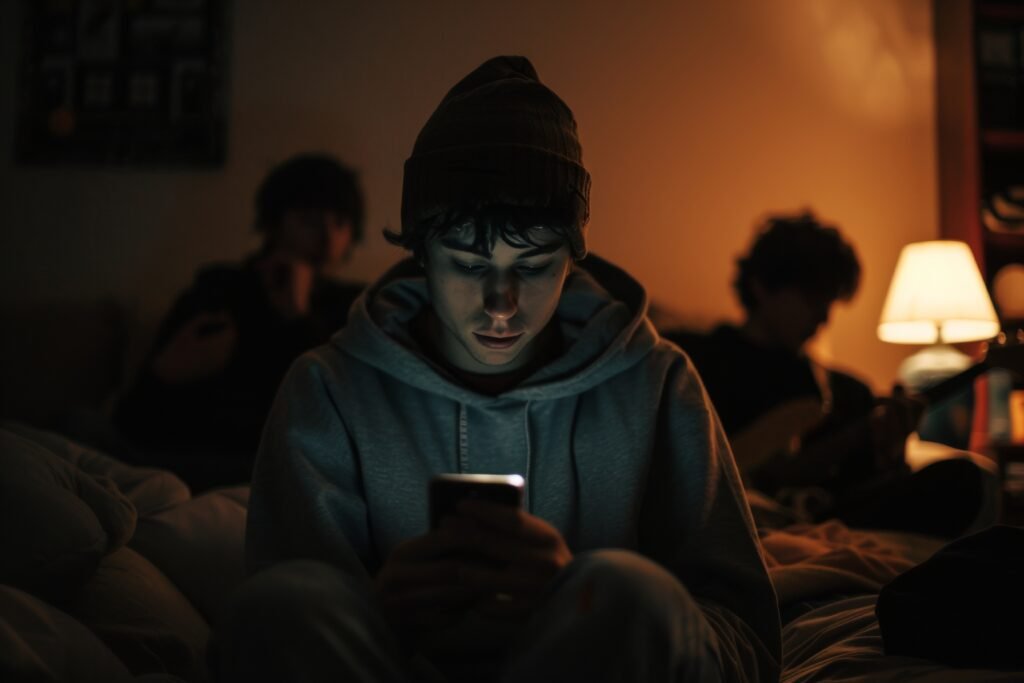
Continuous notifications and infinite feeds hijack attention through variable rewards (dopamine hits). Blue light in the evening suppresses melatonin, delaying sleep onset and reducing deep sleep. Over time, this pattern correlates with higher anxiety and lower mood.
Evidence overview: WHO – Mental Health, NIMH, CDC – Sleep.
Common Symptoms of Digital Overload
Mood & Anxiety
- Restlessness, irritability, racing thoughts
- Doom-scrolling & comparison anxiety
Sleep
- Trouble falling asleep, shallow sleep
- Daytime fatigue, reliance on caffeine
Cognition
- Brain fog, memory lapses
- Reduced deep-work capacity
Behavior
- Impulse checking, app switching
- Low tolerance for boredom or quiet
Sleep, Blue Light & Social Feeds
Evening screens delay melatonin release; algorithmic feeds spike arousal right when your brain needs to downshift. Aim for a 60–90 minute “digital sunset” before bed. Replace scrolling with light reading, stretching, or a warm shower.
See public guidance from Cleveland Clinic and CDC Sleep.
Focus, Productivity & Burnout
Task-switching reduces throughput and increases error rates. Meetings stacked without recovery lead to cognitive depletion. To protect focus:
- Create two deep-work blocks daily (60–90 minutes each)
- Batch email & chat checks 2–3 times/day
- Move non-urgent messages to “scheduled send”
- Insert 3–5 minute resets between meetings
Explore organizational support via Corporate Wellness & EAP.
A 7-Day Digital Reset (Step-by-Step)
- Day 1 – Audit: Screenshot battery usage & screen-time by app. Identify top 3 drains.
- Day 2 – Notifications: Disable non-critical alerts; keep only calls and calendar.
- Day 3 – Boundaries: Pick app-free meals; set a post-work curfew (e.g., 8:00 pm).
- Day 4 – Batch: Email/chat windows at 10:30, 14:30, 17:30 only.
- Day 5 – Sleep: 90-minute digital sunset, blue-light filters, bedside analog alarm.
- Day 6 – Deep Work: Two 60–90 minute focus blocks; meetings outside these windows.
- Day 7 – Reflect: Re-check screen-time; keep the top 3 changes that helped.
If you struggle to stick with it, consider skills coaching through Therapy & Counseling or targeted Anxiety & Stress Therapy.
Families, Teens & Healthy Boundaries
- Shared charging station outside bedrooms
- Screen-free dinners & school-night limits
- Model your own digital hygiene as parents
- Use parental controls collaboratively, not punitively
For persistent conflict or anxiety, explore Child & Teen Therapy.
When to Seek Help in Dubai
Reach out if screen-time is linked to panic, insomnia for 2+ weeks, relationship strain, or declining performance. Book a confidential session with a DHA-licensed clinician, in person or via secure teletherapy.
FAQs
Does blue light really affect sleep?
Yes. Evening exposure can suppress melatonin and delay sleep onset (CDC, Cleveland Clinic).
How much screen time is “too much”?
It depends on context. Watch for function impacts: sleep loss, anxiety, reduced focus.
Can therapy help with digital addiction?
Yes. CBT, mindfulness, and habit design are effective for impulse control and anxiety.
Is teletherapy as effective as in-person care?
It can be for many concerns. Some cases benefit more from in-person sessions.
Ready to Feel Clearer?
Small changes compound quickly. If you need support, book a session or talk to your HR team about EAP counselling. We’re here to help—quietly, professionally, and on your schedule.
References: WHO, CDC – Sleep, NIMH, Cleveland Clinic
